Practicing Discernment with Digital Media
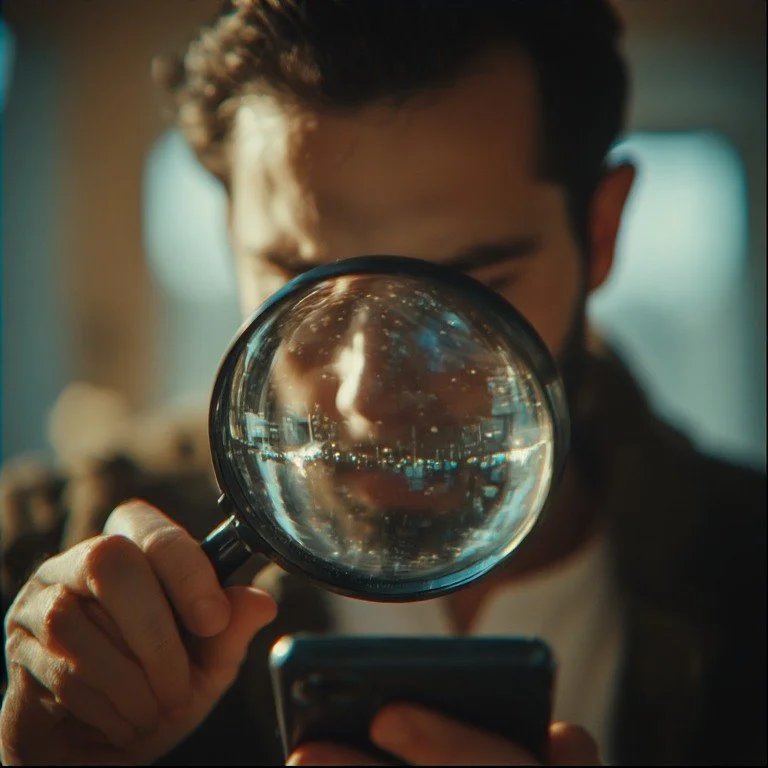
AI Generated Image
In this fast-paced world of digital media, false information spreads at unprecedented speeds. Also driven by sensationalism, interest in conspiracy theories, and people's inability or unwillingness to search out the truth, false stories have a tendency to spread faster than real ones. We need to learn to be responsible consumers and sharers of information. The heart of the discerning acquires knowledge, for the ears of the wise seek it out. (Proverbs 18:15 NIV) Social Media has become a hot-bed for perpetuating false information. Much of this information is created with the intention to mislead and deceive. Before clicking “share,” we need to take pause and verify the validity of the information, so we don’t become part of the problem. You shall not circulate a false report. Do not put your hand with the wicked to be an unrighteous witness. (Exodus 23:1)
False information comes in a variety of forms. “Misinformation” refers to inaccurate information that happens for innocent reasons. This can include news stories that are not adequately vetted, changes in information as new details become available, or any post that is not intentionally false, due to ignorance and/or lack of verification. People may share this type of information because they believe it to be true, not realizing the inaccuracies. “Disinformation,” on the other hand, is created with the intention to mislead. This preys on people’s willingness to share information that they find interesting, cool, or curious. Disinformation includes “Fake News” — fabricated headlines and news stories purposely created with the intention to mislead and manipulate readers. Other types of disinformation can come in the form of propaganda, the systematic spreading of biased or misleading ideas to promote specific causes or political agendas, and sales promotions of products and services. AI (artificial intelligence) is now also getting in the act, making it even harder to distinguish fact from fiction. Life-like images, audio recordings, videos (deep-fakes), and text writings can be created with AI and masquerade as real news. AI-driven “bots” also replicate the same false stories over and over again, leading people to think that everyone believes it to be true. You shall not go around as a gossip among your people, and you are not to act against the life of your neighbor with slander or false testimony; I am the Lord. (Leviticus 19:16 AMP) We need to be good digital citizens and exercise control, examining the validity of a claim before perpetuating a falsehood.
Do not conform to the pattern of this world, but be transformed by the renewing of your mind. Then you will be able to test and approve what God’s will is—his good, pleasing and perfect will. (Romans 12:2 NIV) Discernment is essential. Exhibit restraint. If you don’t have the time or desire to establish the legitimacy of a claim, you shouldn’t believe it and you should not irresponsibly encourage propagation of it. Some general indicators of low credibility can include: excessive advertisements, lack of information about the author, no references/citations, uses sensationalism, evokes a strong emotional reaction, or clickbait (a headline, etc. that makes you want to click on a hyperlink). Be skeptical of posts and the like that exhibit these characteristics. Some sites you can utilize to check the level of credibility of stories, claims, or hoaxes include: Factcheck, Politifact, and Snopes.
Other strategies that you can employ to scrutinize information yourself include:
The CRAAP Test (Currency, Relevance, Authority, Accuracy, Purpose)
C: What is the timeliness of the information? When was it last updated?
R: Is it appropriate for your needs? Answer your questions?
A: Who is the author or publisher? Do they have credentials?
A: Do they supply evidence? Can you confirm information with other sites?
P: Is it to inform, sell, entertain, persuade? Do you see potential bias?
Lateral Reading
Instead of just scrolling down a site, open new browser tabs to search for information about that source and other sources that may validate or refute the first source. Check “About Us” information, find the original source of the statements or statistics they present, etc.
The SIFT Technique (Stop, Investigate, Find, Trace)
S: Stop and take the time to validate.
I: Investigate the source/person providing the information.
F: Find better sources that may validate or refute.
T: Trace the claims presented to the original context.
Additional Resources: Harvard Guide to Evaluating Sources and Purdue OWL Guide to Evaluating Digital Sources
But solid food belongs to those who are of full age, that is, those who by reason of use have their senses exercised to discern both good and evil. (Hebrews 5:14)
Traversing the realm of news outlet media comes with its own set of dilemmas and considerations. Liberal media sources and conservative media sources, for the most part, are diametrically opposed. Very often, news covered by conservative media outlets is squashed and completely ignored by liberal media. What a news outlet does or does not include in their coverage is just part of the problem. Stories covered by both ends of the political spectrum can vary in perspective so vastly that they may not even resemble the same story. (See this interactive chart of news media outlet political ideological leanings.) We tend to watch news that speaks to our beliefs. We exhibit confirmation bias when we believe information that aligns with what we already think. According to Fair Media Council, “Just like a food diet, a healthy media diet encourages the use of different news outlets to feed your brain with different stories, ideas, sources, and opinions.” They also explain that, “Reporting the news and talking about the news are two entirely different endeavors.” Talking about the news, or commentary, involves interjecting one’s opinions and interpretations. Visit their website for more detail.
In regard to AI generated images, I provide the following resources:
SightEngine gives you the ability to drag and drop an image into their site to determine if it was generated with AI. Medium shows you examples of what to look for as indicators of AI generation. And Britannica Education presents a quiz to test how good you are at detecting AI generated pictures.
But test everything that is said to be sure it is true, and if it is, then accept it. (1 Thessalonians 5:21 TLB)
